
Commercial Carpet Cleaning in Buffalo, NY
Commercial carpet fails from the bottom up. Soil works down through the pile, grinds against the fiber every time someone walks on it, and wears the carpet out from underneath long before the surface looks worn. RTJ cleans commercial carpet across Buffalo and Western New York with the method that fits the fiber, the soil level and how fast you need the space back.
Two methods, chosen for the situation
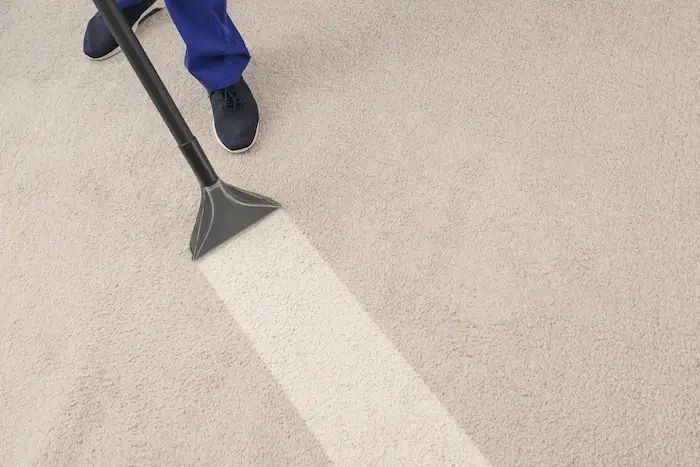
Hot water extraction
The deepest clean available and what carpet manufacturers generally specify for restorative work. Heated solution is injected into the pile and immediately vacuumed back out with the suspended soil. It is the right choice for heavily soiled carpet, for the first clean of a neglected floor, and for anywhere odor is involved. It uses more moisture, so dry time is longer and airmovers usually go down afterwards.
Low-moisture encapsulation
A polymer is worked into the pile, crystallises around soil particles, and is removed by normal vacuuming over the following days. Dry time is typically one to two hours, which makes it the practical choice for interim maintenance in offices that reopen the next morning, for corridors that cannot be closed, and for carpet tile in high-traffic circulation routes.
Most buildings do best on a program that uses both: encapsulation on a frequent interim cycle to hold appearance, and extraction periodically to reset the carpet properly.
What we treat
- Broadloom and carpet tile in offices, corridors and conference rooms
- Entrance and lobby carpet carrying the heaviest Western New York soil load
- Traffic lanes, elevator landings and stair carpet
- Cubicle panels and upholstered office seating
- Spot and stain treatment including coffee, ink, grease and salt residue
- Odor treatment and pre-treatment for heavily soiled areas
Winter salt is the local problem
Between November and April, Buffalo entrance carpet takes on road salt in solution. It dries to a white crystalline bloom that reappears days after cleaning if it was not fully rinsed out, because the residue is still in the pile. Salt needs a neutralising pre-treatment and thorough extraction, not just a surface pass, and it is the reason entrance carpet usually needs cleaning two to three times more often than the rest of the floor.
Realistic dry times
Encapsulation is normally walkable in one to two hours. Hot water extraction typically takes four to eight hours depending on airflow, humidity and how much moisture the carpet needed. We schedule extraction for a Friday evening or a closure where we can, and we place airmovers to shorten it. Any company quoting an instant dry time after a genuine extraction is describing a different service.
How often should commercial carpet be cleaned?
Entrances and main traffic lanes usually need interim cleaning quarterly or more often. General office areas commonly run one to two restorative cleans a year with interim work in between. Executive and low-traffic space can go longer. The honest test is a white towel pressed hard into a traffic lane. If it comes up grey, the carpet is overdue regardless of what the schedule says.
Schedule carpet cleaning
Call (716) 444-3622 or send a message with the approximate square footage of carpet and whether the space can be closed overnight.
More about this service
What fiber is your carpet, and why does it change the method?
Carpet fiber decides the cleaning chemistry, the water temperature and how much of a stain can realistically be removed, so identifying it is the first thing that should happen on a commercial floor. In a commercial building the fiber is normally nylon, olefin (also called polypropylene), polyester, or wool.
There are two easy ways to find out and one fallback. Look at the back of a spare carpet tile or the attic stock in the storage closet, because the mill usually prints the fiber content there. Check the original submittal or specification sheet from the installation. If neither exists, a cleaner can take a small yarn sample from a hidden edge, under a base or inside a closet, and run a fiber identification test off the floor.
Here is what each fiber means once the work starts:
| Fiber | Behavior that matters | Effect on cleaning |
|---|---|---|
| Nylon | Accepts acid dyes and tolerates heat well | Coffee, fruit drinks and other dye spills can bond permanently if they sit; responds well to hot extraction and heat-assisted spotting |
| Olefin | Solution dyed, so it will not dye-stain, but it holds oil | Traffic lanes go greasy and gray; needs a solvent-side pre-spray with real dwell time, because added heat alone will not lift oil |
| Polyester | Also oil-loving, and less resilient than nylon | Pile crushes in traffic lanes and stays crushed, so mechanical pile lifting matters as much as the chemistry |
| Wool | Sensitive to high pH, to heat and to over-wetting | Strong alkaline products degrade and yellow the fiber, and over-wetting can pull browning up out of a jute backing. Calls for mild acid-side chemistry, lower heat and fast drying. |
What a pile lifter and a groomer actually do
Both of these change how the floor looks when it dries, and both are easy to leave out of a job.
A pile lifter is an upright machine with a stiff rotating brush set low enough to reach the base of the pile. It stands crushed yarn back up and beats packed dry soil loose so the vacuum can pull it out, which suction on its own will not do once soil has settled at the base of the yarn.
A groomer is a wide rake or brush pushed through the pile by hand, and it gets used at three points in a job:
- After the pre-spray, to carry the chemistry from the tips down to the base of the yarn instead of leaving it sitting on top
- After cleaning, to lay the pile in one direction so it dries evenly rather than setting with swirl marks and wand tracks
- After an encapsulation pass, to work the polymer around individual fibers rather than letting it pool, which is what lets the crystals release soil into later vacuuming
Grooming costs a few minutes per room. Skipping it is one reason a freshly cleaned floor can look streaked once it is dry.
Carpet tile or broadloom: what changes in a commercial clean
Both get cleaned in place, but they fail differently, and which one you have also decides whether a ruined area can simply be swapped out.
| Factor | Carpet tile | Broadloom |
|---|---|---|
| Damaged area | Individual tiles lift out and can be replaced from attic stock, and rotating a worn lane tile with one from a quiet corner evens out wear | Repair means a patch or a reseam, and matching an older dye lot is difficult |
| Moisture | The backing is largely impermeable, so moisture stays up in the pile and dry time is shorter, but standing water travels along the seams and can soften the adhesive | Moisture can pass into the backing and the cushion, which is the path that leaves contamination below the yarn |
| Appearance | Quarter-turn installations break up traffic patterns; a replacement tile from a different dye lot is obvious | A traffic lane reads as one continuous stripe down the length of a corridor |
If you are choosing between the two during a renovation, ask how the floor will be maintained after the install, because that is what decides how it looks in year three. It belongs in the same conversation as the rest of the building's commercial cleaning scope.
Why pre-vacuuming comes before any water
Pre-vacuuming removes the dry soil, and dry soil is the part that ruins a wet clean when it is left in the pile. Sand, grit, drywall dust, paper fiber and tracked-in stone make up the bulk of what is sitting in a commercial carpet, and none of it dissolves.
Introduce water to all of that at once and it turns to mud. Mud gets pushed down toward the backing where the extraction wand cannot reach it, and the wand spends the rest of the job moving slurry around. The floor looks acceptable while it is damp and reads dull once it dries.
Doing the dry side properly takes more than one quick pass:
- Slow, overlapping passes, and a second set at right angles to the first, because a fast pass rides over granular soil instead of lifting it
- A vacuum with a bag or filter that actually holds fine dust, otherwise the fines go straight back into the room air
- A pile lifter on packed traffic lanes, where an ordinary vacuum cannot reach the soil at the base of the yarn
Routine vacuuming between cleanings is what keeps that load manageable, and it normally sits with the nightly crew as part of an office cleaning scope. Floors coming out of a build carry the heaviest dust and grit load of all and are handled as post-construction cleanup before any routine program starts.
What should you do in the first few minutes of a spill?
Blot, do not rub, and work from the outside of the spill inward. What happens in the first few minutes usually decides whether a spot comes out later.
- Lift solids off first with a spoon or a stiff card before adding any liquid
- Blot with a clean white towel, pressing straight down. Rubbing distorts the pile and drives the spill deeper
- Work from the edge toward the middle so the spot does not spread outward
- Use cool water rather than hot on protein spills such as milk, blood or egg, because heat sets protein
- Skip dish soap and general purpose cleaner. They leave a sticky residue in the yarn that keeps collecting foot soil, and the spot slowly turns into a permanent dark patch
- Do not lay a colored or printed towel on wet carpet, because the dye can transfer into the fiber
- Finish by weighting a folded white towel on the damp area to draw the rest of the moisture up out of the pile
Then tell your cleaner what was spilled and roughly when, because the treatment for a dye spill, an oily spill and a protein spill are not the same. Anything that soaked through to the cushion, or that came from a pipe, a roof or an appliance, is water damage restoration rather than carpet cleaning, because the cushion and the subfloor have to be dried as well.
Carpet Cleaning questions
More answers on the FAQ page.
How long does commercial carpet take to dry?
Low-moisture encapsulation is usually walkable in one to two hours. Hot water extraction typically takes four to eight hours depending on airflow and humidity; we use airmovers to shorten it.
Which method is better?
Neither is better in isolation. Extraction cleans deepest and is right for heavy soil and odor. Encapsulation dries fast and is right for interim maintenance in space that must reopen quickly. Most buildings use both on a program.
Why do white marks come back after cleaning?
That is almost always road salt residue that was not fully rinsed out of the pile. It needs a neutralising pre-treatment and proper extraction rather than a surface pass.
How often should office carpet be cleaned?
Entrances and traffic lanes usually need interim cleaning quarterly or more often. General office areas commonly need one to two restorative cleans per year with interim work in between.
How can I tell whether my carpet is nylon or olefin?
Check the back of a spare carpet tile or the attic stock in your storage closet, since the mill normally prints the fiber content there, or look at the original specification sheet from the installation. If neither is available, a cleaner can take a small yarn sample from a hidden edge and run a fiber identification test off the floor. It matters because olefin holds oil and needs a solvent-side pre-spray with dwell time, while nylon can dye-stain permanently but responds well to heat.
Do carpet tiles have to be lifted to be cleaned?
No. Carpet tile is cleaned in place. The backing is largely impermeable, so moisture stays up in the pile and dry time is shorter than broadloom, but standing water can travel along the seams and soften the adhesive, so moisture is kept controlled. A tile damaged beyond cleaning can be replaced individually if you have attic stock.
Why do traffic lanes still look darker after cleaning?
Part of what you are seeing in a lane is crushed pile rather than soil. Yarn that has been walked flat lies at a different angle to the rest of the floor and reflects light differently, so it reads as a darker stripe even when it is clean. Pile lifting and grooming stand that yarn back up. Polyester crushes more readily than nylon, which is why lanes show earlier on some floors than others.
What should we do before the crew arrives?
Clear the floor of anything you do not want moved: personal items, cords, boxes, wastebaskets and anything fragile sitting on low furniture. Point out which areas have had spills or leaks and roughly when, since that changes the approach. Let us know where the crew can park, which entrance to use and whether there is elevator access.
Does carpet protector need to be reapplied after cleaning?
Mill-applied protector wears off in traffic lanes over time and is partly removed by cleaning, so it can be reapplied after an extraction while the carpet is still damp. It does not make carpet stain proof. What it does is buy time before a spill sets, which is most useful at entrances, in corridors and around break room areas.
Ready for a quote?
Call (716) 444-3622 or send us the details of your building.